How to Select a Pneumatic Cylinder: Start with the Application
Knowing how to select a pneumatic cylinder starts with a simple discipline: define the job before looking at a spec sheet. Pneumatic cylinder selection goes wrong most often when someone picks a bore size or stroke length first and works backward, rather than starting from the load, the speed, the available space, and the environment the cylinder will actually operate in.
Choosing the right pneumatic cylinder means matching five things at once: acting type, bore and stroke, force output, mounting style, and duty cycle. Get the application requirements down clearly first, and most of the rest of the decision becomes straightforward — the harder part is usually knowing which requirement matters most for a given job.
Single-Acting vs. Double-Acting Cylinder: The First Decision
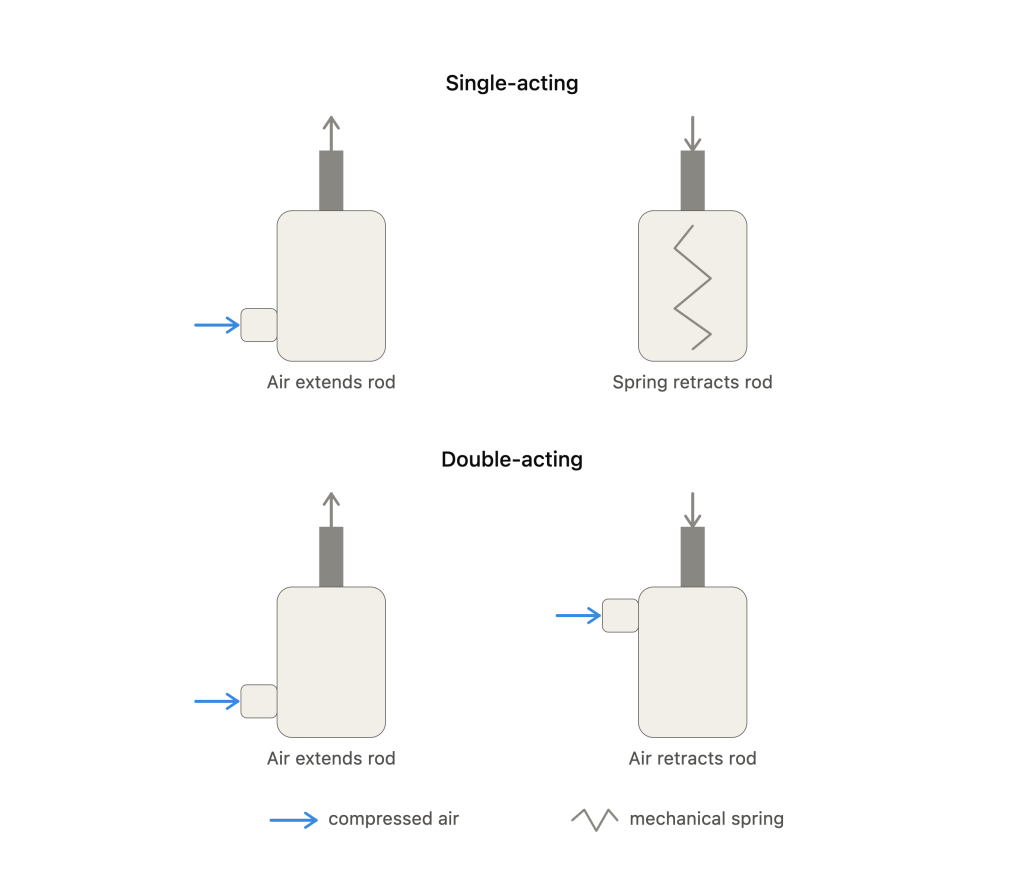
The first fork in the road is single-acting vs double-acting cylinder selection, since it affects cost, control, and how the cylinder returns to its starting position. A single-acting cylinder uses compressed air to move in one direction and a mechanical spring to return, which keeps the design simple and the air consumption lower, but limits the usable force and the stroke length a spring can practically manage.
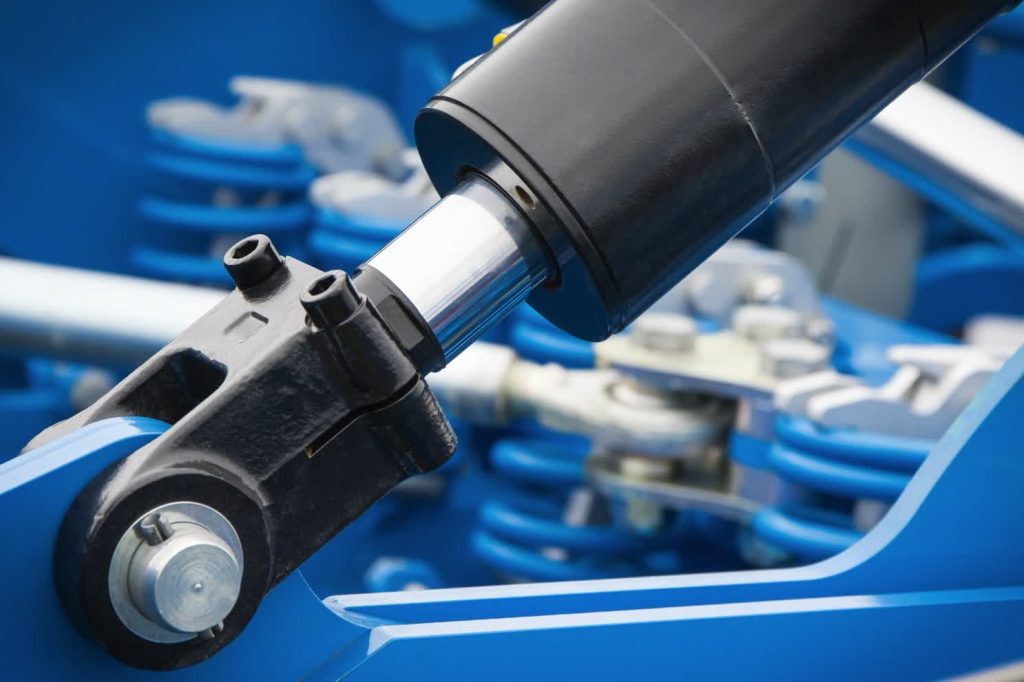
A double-acting cylinder uses air on both sides of the piston, giving full, controlled force in both directions. This is the more common choice for industrial applications that need consistent speed and force on the return stroke, not just the working stroke — clamping, pressing, and indexing tasks usually call for double-acting design. For a deeper look at how each type physically operates, see Pneumatic Actuator Working Principle Explained.
Pneumatic Cylinder Sizing: Bore Size and Stroke Length
Pneumatic cylinder sizing comes down to two dimensions: bore size and stroke length. Pneumatic cylinder bore size sets the piston’s surface area, which directly determines how much force the cylinder can generate at a given air pressure — a larger bore produces more force from the same supply pressure, but also uses more compressed air per cycle and typically costs more.
Pneumatic cylinder stroke length is simply how far the piston travels, and it needs to match the actual distance the load must move, with a small margin rather than a large one — excess stroke adds unsupported rod length, which increases the risk of bending or buckling under load, especially in horizontal mounting. Long-stroke, heavy-load combinations often need a larger bore or a guided cylinder to keep side loading in check.
Getting bore and stroke right together avoids two common mistakes: undersizing, which leaves a cylinder struggling to hit cycle times, and oversizing, which adds cost and air consumption without improving performance.
Cylinder Force Calculation: Matching Force to the Load
Cylinder force calculation is based on one relationship: force equals the air pressure multiplied by the piston’s effective area. A larger bore or higher supply pressure both increase available force, and the two can be traded off against each other within the limits of your air supply and the cylinder’s pressure rating.
In practice, the calculated force should never be treated as the usable force. Friction, seal drag, and the load’s own acceleration all reduce the force actually delivered, which is why most engineers size a cylinder with meaningful headroom above the theoretical minimum rather than right at it. Most standard industrial cylinders are rated for operation up to around 10 bar (145 psi), which sets the practical ceiling on how much added force a higher supply pressure can provide before you need a larger bore instead.
Pneumatic Cylinder Load Requirements and Operating Conditions
Pneumatic cylinder load requirements go beyond raw weight. Speed, acceleration, and whether the load is static or in motion when the cylinder engages all change the effective force needed, and a cylinder sized only for the resting weight of a part can still stall or wear out quickly under a fast, repetitive cycle.
Mounting style matters just as much as sizing. Foot, flange, and pivot mounts each handle side loading differently, and the wrong mounting choice for a given load path is a common source of premature seal and rod wear, even on a correctly sized cylinder. Environmental conditions — dust, washdown, temperature, or exposure to chemicals — narrow the choice further, often ruling out standard seals or steel construction in favour of corrosion-resistant or high-temperature options.
Pneumatic Cylinders for Industrial Applications in Canada
Pneumatic cylinders for industrial applications across Canada see a wide range of duty cycles, from continuous high-speed cycling in electronics assembly to heavy, infrequent strokes in material handling and food processing equipment. Ontario’s automotive and parts manufacturing base, along with strong food and beverage and electronics sectors, puts particular pressure on getting cylinder selection right the first time, since unplanned downtime on a production line is expensive regardless of industry.
Humphrey Automation supports manufacturers across Ontario, Ottawa, and Montreal with cylinders from AirTAC, Fabco-Air, and Koganei, spanning standard NFPA cylinders, compact and guided designs, and high-speed models built for continuous-duty cycling. You can browse the full range of actuators and cylinders to compare bore sizes, stroke lengths, and mounting styles side by side.
Frequently Asked Questions
If the application only needs force in one direction and gravity or a light spring can handle the return, a single-acting cylinder is usually sufficient. If you need controlled force and speed in both directions, choose a double-acting cylinder.
Multiply the required force by a safety margin, commonly 1.5 to 2 times the calculated minimum, to account for friction and acceleration, then work backward to the bore size and pressure combination that meets it.
No. A larger bore increases force and cost, and uses more compressed air per cycle. Oversizing is a common and avoidable expense once the actual load and speed requirements are known.
Sizing the cylinder for the load’s static weight only, without accounting for speed, acceleration, or the mounting style’s effect on side loading, all of which change the force actually required.
Getting the Right Cylinder the First Time
Choosing the right pneumatic cylinder is rarely about finding the single correct model — it’s about matching acting type, bore, stroke, and mounting to the real conditions the cylinder will face, with enough margin to handle normal wear and variation in load. Getting this right the first time avoids the more expensive path of replacing an undersized cylinder mid-project or paying for capacity you never use.
If you’re specifying a cylinder for a new or existing line, our team can help match a model to your force, speed, and environmental requirements — see our full actuators and cylinders range or get in touch to talk through your application.