Quick answer: Industry 4.0 is transforming pneumatic automation by connecting valves, actuators, and sensors to the plant’s data network. Instead of working as isolated, manually adjusted hardware, pneumatic components now report their own condition, respond to real-time data, and integrate with factory-level control systems.
What Is Industry 4.0 in Pneumatics?
Industry 4.0 is the integration of digital technologies — the Internet of Things (IoT), cloud computing, artificial intelligence, and big data — into manufacturing. The result is the “smart factory,” where machines, systems, and people share information in real time. Industry 4.0 pneumatic automation applies that idea to compressed-air equipment: valves, actuators, and sensors that once only received commands now send data back as well.
Two terms come up often. The IIoT (Industrial Internet of Things) means IoT-connected devices used in industrial settings. IT/OT integration means linking information technology — analytics and business software — with operational technology, the control hardware that runs the line. Most of the practical work of Industry 4.0 in pneumatics happens where those two meet.
| Aspect | Traditional pneumatic system | Industry 4.0 pneumatic system |
|---|---|---|
| Communication | One-way: the controller sends on/off signals | Two-way: components also report status and data |
| Monitoring | Periodic manual checks | Continuous readings of pressure, temperature, and flow |
| Maintenance | Reactive or calendar-based | Condition-based, driven by trend data |
| Adjustments | Manual, at the machine | Software-based, local or remote |
| Role of data | Rarely collected | Feeds analysis and plant-level decisions |
How Does Industry 4.0 Change Pneumatic Systems?
How Are Connected Pneumatic Systems Linked to the Factory Network?
Connectivity is the foundation for everything else. In connected pneumatic systems, valves, actuators, and pneumatic sensors carry communication interfaces so they can exchange data with PLCs and other plant systems in real time. Pneumatic equipment then becomes part of the automated process rather than a separate, hard-wired island.
A common interface is IO-Link, a two-way, point-to-point digital standard (IEC 61131-9) that connects sensors and actuators through an IO-Link master to a PLC over a fieldbus or industrial Ethernet. For IO-Link pneumatic valves, that means data can flow back to the controller as well as commands out to the valve. Not every valve supports it, so confirm the interface in the manufacturer’s specification when selecting pneumatic valves for a connected line. Humphrey Automation’s smart pneumatic controllers pursue the same goal, combining IoT and network integration with sensing of pressure, temperature, and flow.
How Does Industry 4.0 Improve Monitoring and Predictive Maintenance?
Sensors in or near pneumatic components collect pressure, temperature, and flow data. Analysis software compares it against normal behavior and flags drift before it becomes a failure — the core of predictive maintenance in pneumatic automation: servicing a component when its data says so, not when the calendar does. The component-level picture is covered in our guide to smart pneumatics, and the practical setup in using monitoring data to improve pneumatic system performance.
Can Smart Pneumatic Automation Reduce Energy Use?
Within limits, yes. Smart pneumatic automation can adjust pressure and flow to actual demand using real-time data, rather than running at a fixed setting regardless of load. Compressed air is costly to generate, so trimming unnecessary supply pressure and catching waste early both matter. For where those savings typically come from, see energy savings in pneumatic automation.
How Does Connectivity Make Pneumatic Automation More Flexible?
With IoT-enabled pneumatic automation, remote monitoring and software-based adjustment let manufacturers change settings without sending someone to the machine. Proportional valves, which set pressure or flow from an electronic signal rather than a manual dial, are one example: changing a setpoint becomes a software task instead of a physical adjustment. That supports quicker changeovers between products and smaller production runs.
How Do Pneumatic Systems Fit into a Smart Factory?
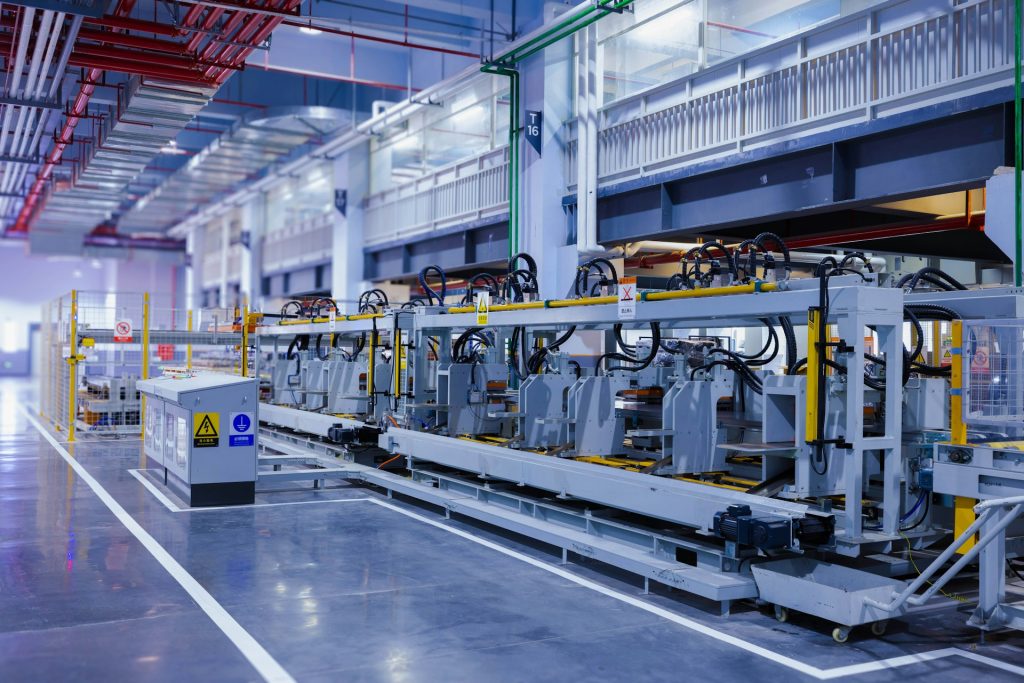
Pneumatic systems in smart factories keep doing what they have always done — clamping, gripping, pressing, and moving parts — but they also become a data source. Pneumatic automation in a smart factory appears on the same dashboards as electric drives and other machinery. IIoT-connected pneumatic systems let a plant compare cycle times, air consumption, and fault events across lines, which shows engineers where to improve a process and where waste is building up.
Most lines mix technologies. Humphrey Automation’s industrial manufacturing use cases combine pneumatic components, electrical motion systems, and machine vision; a shared data layer is what lets them run as one process instead of three.
What Challenges Come with Industry 4.0 Pneumatic Systems?
The benefits come with real implementation work:
- Upfront investment — sensors, communication hardware, software, and training all cost money. Starting with the line where downtime or air waste is most expensive limits the risk.
- IT/OT integration — connecting plant-floor controls to analytics and business systems takes careful planning, because the two sides often use different tools and priorities.
- Legacy equipment — existing pneumatic hardware may need retrofit sensors or gateways, and some basic components can’t report data at all.
- Data security — connected devices widen the attack surface, so look for access control and encryption on any networked controller.
- Skills — operators and maintenance staff need to be comfortable reading the data and acting on it.
A phased rollout, one line at a time, is usually safer than converting a whole plant at once.
What Is the Future of Pneumatic Automation?
Current pneumatic automation trends point toward more connected, more compact, and more self-reporting equipment: standard interfaces such as IO-Link on more components, richer onboard diagnostics, and tighter links between pneumatic data and plant-level analytics. Miniaturization is part of the same shift, as compact pneumatic systems fit sensing and control into smaller packages. These are directions rather than guarantees, and adoption will vary by application and budget.
What isn’t changing is the compressed air itself. Digital pneumatic automation adds a data layer on top of proven hardware; it doesn’t replace it.
FAQ: Industry 4.0 and Pneumatic Automation
Yes. Pneumatics remains widely used for clamping, gripping, pressing, and material handling. Industry 4.0 adds connectivity and data on top of it rather than replacing it.
IO-Link is a two-way digital communication standard (IEC 61131-9) that links sensors and actuators to a PLC through an IO-Link master. For valves, it lets data travel back to the controller as well as commands to the valve.
Often partly. Sensors and gateways can usually be added to an existing line, but the scope depends on what the current components can support, and some may need replacing.
Smart pneumatics refers to individual components with sensing and connectivity. Industry 4.0 pneumatic automation is the wider picture: how those components integrate with factory-level systems, data, and processes.
Usually integration — connecting plant-floor hardware with IT systems — along with upfront cost and training. A phased rollout limits the risk.
Bringing Industry 4.0 to Your Pneumatic Systems
Industry 4.0 doesn’t replace compressed air; it adds visibility and control to it. Humphrey Automation supplies pneumatic components and automation solutions to manufacturers across Canada, and for a connected setup built around a specific line, our team also handles custom automation solutions.