Selecting the right actuator is one of the most important decisions when designing or upgrading an automation system. The wrong choice can lead to poor performance, excessive maintenance, energy loss, or reduced equipment lifespan.
If you’ve ever asked yourself, “What pneumatic actuator do I need?” or “How do I choose a pneumatic actuator for my application?”, the answer depends on several technical and operational factors.
This pneumatic actuator selection guide focuses on the most important considerations when selecting pneumatic actuators for industrial automation. Rather than comparing every possible model, it’s more effective to understand the core criteria that determine actuator performance and long-term reliability.
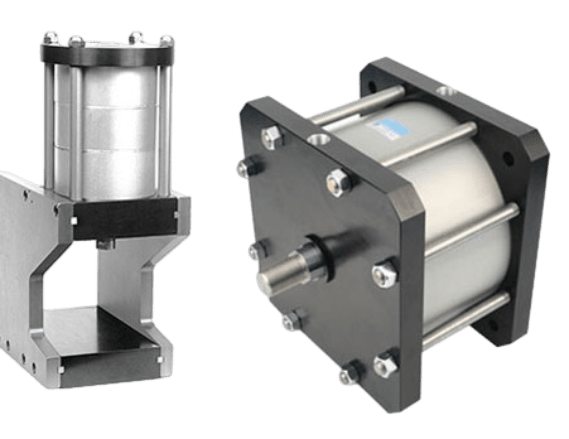
Understand the Application Requirements First
The first step in choosing the right pneumatic actuator is understanding exactly what the system needs to accomplish.
Different applications require different motion types, force levels, operating speeds, and environmental resistance. For example, a packaging line moving lightweight products has very different requirements compared to a heavy-duty material handling system.
When evaluating applications, consider:
- load weight
- travel distance
- operating speed
- mounting limitations
- cycle frequency
- environmental conditions
This is also where understanding pneumatic actuator types becomes important. Some applications require linear motion, while others require rotational movement.
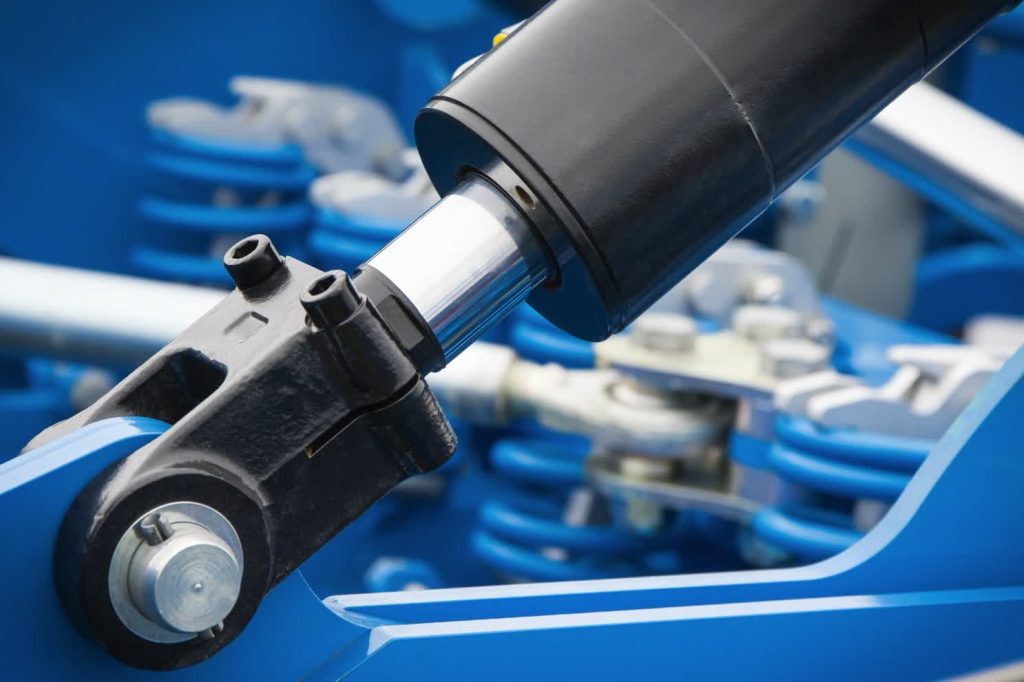
A pneumatic linear actuator is commonly used for pushing, lifting, clamping, or positioning tasks. Meanwhile, rotary actuators are typically used for indexing, turning, or automated assembly processes.
In many industrial systems, manufacturers combine multiple actuator types to optimize motion control and production speed.
Determine the Required Force and Pneumatic Actuator Sizing
One of the most important parts of pneumatic actuator sizing is calculating the force required for the application.
Actuator force depends on:
- air pressure
- cylinder bore size
- load resistance
- friction
- movement direction
If the actuator is undersized, it may struggle to move the load consistently. If it is oversized, the system may consume unnecessary compressed air and increase operating costs.
This is why engineers often begin by calculating the required force before selecting an actuator model.
When considering how to size a pneumatic actuator, remember that real-world operating conditions matter. Vertical lifting applications, high-speed cycles, or shock loads may require additional force capacity beyond the minimum theoretical calculation.
For compact automation systems, AirTAC actuators are often used where space efficiency and reliable performance are priorities. In applications requiring higher output force, Fabco high-force actuators may be more suitable for demanding industrial environments.
Choosing the correct actuator size also improves system stability and reduces wear on valves, seals, and guides over time.
Choose the Right Motion Type
Another critical factor in selecting pneumatic actuators is determining whether the application requires linear or rotary motion.
Linear actuators generate straight-line movement and are commonly used in:
- packaging systems
- material handling
- pressing operations
- automated assembly
Rotary actuators generate rotational movement and are widely used in:
- robotic systems
- indexing tables
- valve control
- pick-and-place automation
Understanding the motion profile helps narrow down the available pneumatic actuator types and simplifies the selection process.
For example, Fabco rotary actuators are often used in automation systems requiring compact rotational movement with consistent repeatability.
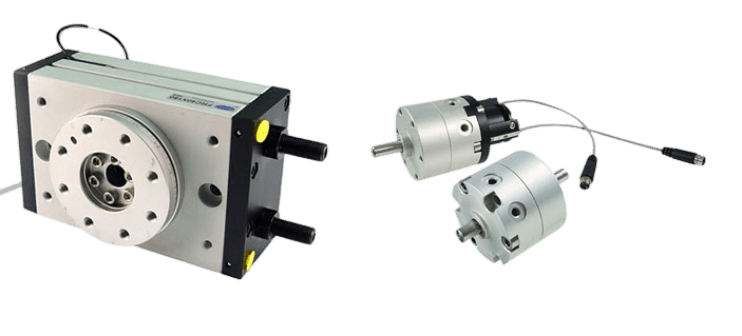
In high-speed manufacturing environments, motion speed and acceleration are equally important. Some applications require fast cycling with minimal vibration, while others prioritize smooth controlled movement.
Koganei high-speed cylinders are frequently selected for applications where rapid cycle times and compact designs are essential.
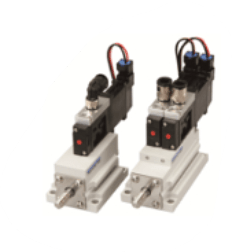
The motion type directly affects not only actuator performance but also overall pneumatic system efficiency.
Consider Operating Environment and System Conditions
The environment where the actuator operates has a major impact on reliability and lifespan.
When selecting a pneumatic actuator for industrial automation, engineers should evaluate:
- temperature
- humidity
- dust exposure
- washdown requirements
- vibration
- chemical exposure
For example, food processing systems often require corrosion-resistant materials and clean operation. Heavy manufacturing environments may require actuators capable of handling debris, impact, and continuous operation.
Compressed air quality also affects actuator performance. Poor filtration or moisture contamination can reduce seal life and increase maintenance requirements.
This is why many pneumatic automation systems include filters, regulators, and lubricators to maintain stable operating conditions.
In harsh environments, durability often becomes more important than speed or compactness. Proper environmental matching significantly improves long-term actuator reliability and reduces downtime.
Evaluate Speed, Control, and Automation Requirements
Modern industrial automation systems increasingly require higher precision, faster cycle times, and smarter motion control.
This means actuator selection is no longer based only on force and movement. Engineers must also evaluate:
- speed control
- positioning accuracy
- sensor integration
- automation compatibility
- maintenance accessibility
Some industrial automation actuators now include integrated sensors that provide position feedback and system diagnostics. These features improve monitoring and predictive maintenance capabilities.
In applications requiring extremely fast movement, actuator responsiveness becomes critical. High-speed production lines depend on reliable actuator timing to maintain throughput and avoid bottlenecks.
When evaluating how to select a pneumatic actuator for industrial automation, it’s important to consider future scalability as well. A system designed only for current production demands may become inefficient as automation requirements grow.
This is especially true in facilities integrating robotics, machine vision, and smart manufacturing technologies into their production processes.
Common Mistakes When Selecting Pneumatic Actuators
Even experienced engineers sometimes overlook critical details during actuator selection.
Some of the most common mistakes include:
- undersizing the actuator
- ignoring environmental conditions
- choosing the wrong motion type
- overlooking mounting constraints
- failing to account for future expansion
Another common issue is focusing only on initial purchase cost instead of total operating cost. An inexpensive actuator may lead to increased air consumption, maintenance, or downtime over time.
Proper planning helps prevent premature wear and improves long-term system performance.
Final Thoughts
Understanding how to choose the right pneumatic actuator requires more than simply selecting a cylinder size or actuator model. The best choice depends on force requirements, motion type, environmental conditions, speed, and long-term automation goals.
By focusing on application requirements first, engineers can simplify the actuator selection process and improve overall system performance.
Whether you are designing compact automation equipment, high-speed production lines, or heavy-duty industrial systems, choosing the right actuator helps maximize efficiency, reliability, and operational consistency.
If you need assistance selecting pneumatic components or automation solutions, Humphrey Automation in Canada can help identify the right actuator technologies and system configurations for your specific industrial application.