Quick answer: Pneumatic valves control the direction, pressure, and flow of compressed air in automotive manufacturing, so cylinders, grippers, and robot tooling move at the right time and speed. They are used on assembly lines, in stamping and pressing, and in robotic cells. The main types are solenoid directional valves, air-piloted valves, manual and mechanical valves, flow control valves, and proportional valves. Choose by function, port and position count, actuation method, response speed, and operating environment.
What Are Pneumatic Valves, and Why Do Automotive Plants Use Them?
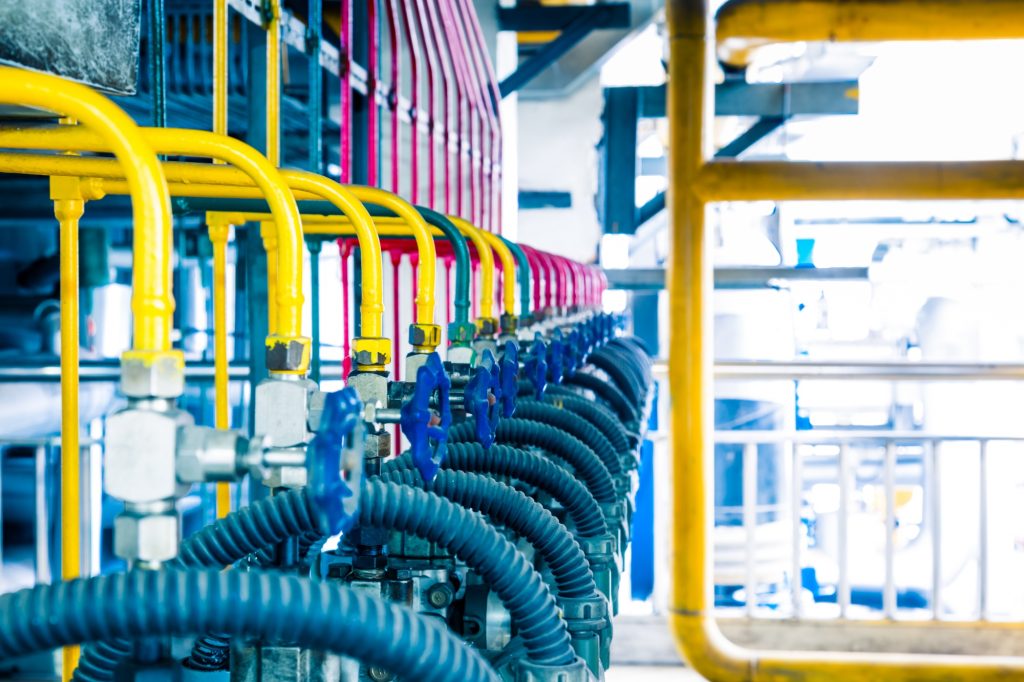
A pneumatic valve directs, stops, or regulates compressed air in a circuit. The most common kind is the directional control valve, which decides where air flows, for example to extend or retract a cylinder. Codes such as 2/2, 3/2, and 5/2 give the number of ports first and the number of positions second, as Wikipedia’s pneumatic circuit article explains.
A solenoid valve is a valve switched by an electrically powered coil, so a controller can trigger it. That makes it a natural fit for plants where one controller coordinates many stations.
This guide covers pneumatic valves in automotive manufacturing: where they work, which types exist, and how to choose between them. Pneumatic valves also appear inside vehicles, for example in truck air braking and suspension, but that is a separate topic.
Where Are Pneumatic Valves Used in Automotive Manufacturing?
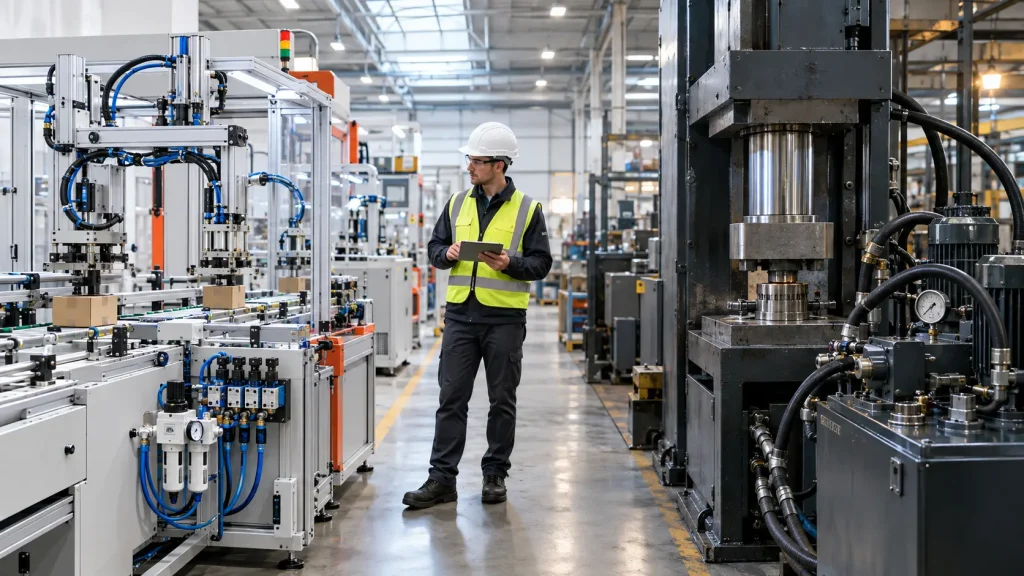
In the automotive industry, pneumatic valves sit wherever a machine moves a part, holds it, or applies a fluid. Our automotive and trucking page lists assembly lines, welding robots, EV battery assembly, stamping and pressing, and quality inspection as key solution areas.
| Process | What the valve does | Example from our range |
|---|---|---|
| Assembly lines | Switches air to cylinders that position and fasten parts | AirTAC MA mini cylinders for robotic interior assembly |
| Stamping and pressing | Controls the cylinders that press | Fabco Air pancake cylinders |
| Paint and coating | Controls the flow of paint and coating fluids | Humphrey iDP valves |
| Welding robots and EV battery assembly | Switches air to clamps, grippers, and tooling | Selected to suit the cell design |
How are pneumatic valves used for assembly line automation?
Pneumatic valves for assembly line automation switch air to the cylinders that locate, clamp, and push parts at each station. On our automotive page, AirTAC MA mini cylinders handle robotic interior assembly. When a station needs a faster return stroke, a quick exhaust valve helps: Wikipedia notes it returns the cylinder quickly and reduces cycle time. Our quick exhaust, check, and auxiliary valves cover this role.
What do pneumatic valves do in robotic cells?
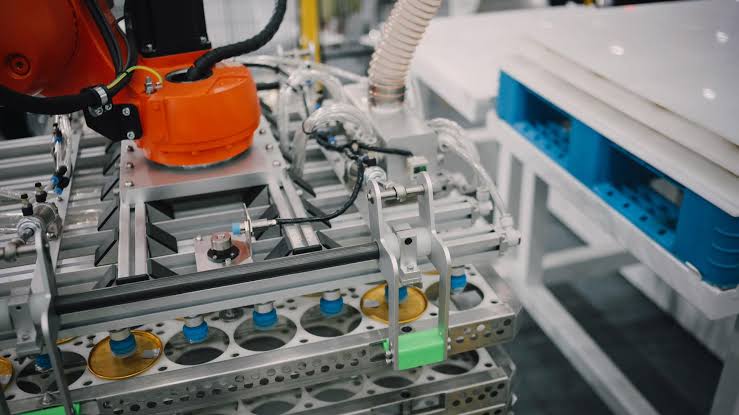
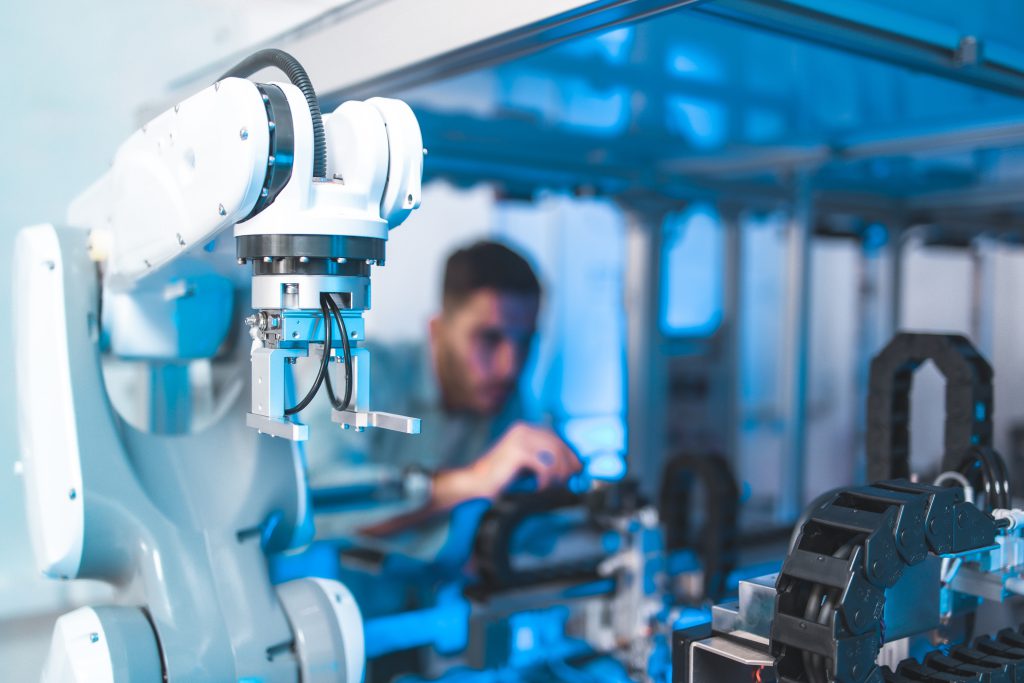
Pneumatic valves for industrial robots control the grippers and tooling on the end of the arm. The valve receives a signal from the robot controller and opens or closes the air path to the tool. For smooth gripper or tool speed, a one-way flow control valve, such as a Pisco speed controller push valve, limits air flow in one direction.
How are valves used in stamping and pressing?
Presses need valves that put safety first. Wikipedia describes a two-pressure valve used in mechanical presses and machine tools: air flows only when both buttons are pressed, so the operator’s hands stay outside the machine. The press cylinders themselves can come from lines such as Fabco Air actuators, which our automotive page lists for pressing and stamping.
Which valves handle paint and coating?
Humphrey iDP valves are listed on our automotive page for paint and coating fluid control. This is a fluid-handling job rather than a cylinder-switching one, so the valve is selected for the fluid, not only for the air supply.
What about EV battery assembly?
EV battery assembly is one of the solution areas on our automotive page. The valve tasks follow the same logic as on any assembly line: clamping, positioning, and gripping at repeatable stations.
What Types of Pneumatic Valves Do Automotive Lines Use?
Automotive lines use six main valve types: solenoid directional, air-piloted, manual or mechanical, flow control, quick exhaust, and proportional. The first three decide how a valve is switched, and the last three shape what the air does. Pneumatic valve applications on the line follow directly from these roles.
| Valve type | How it works | Typical use on the line |
|---|---|---|
| Solenoid directional valve | An electric coil switches the air path | Controller-driven cylinder control |
| Air-piloted valve | An air signal actuates the valve | Switching from a pneumatic signal |
| Manual or mechanical valve | Pedal, push button, or lever actuates it | Operator controls and safety stations |
| Flow control valve | A throttle, often with a check valve, sets speed | Smooth cylinder speed in one direction |
| Quick exhaust valve | Vents the cylinder fast | Shorter cycle times |
| Proportional valve | Adjusts pressure or flow from an electrical signal | Fine, variable control |
Our guide to proportional valves explains why they give finer control than simple on/off valves.
Which solenoid valve type fits which job?
For solenoid valves in automotive manufacturing, the first choice is between direct-acting and pilot-operated designs. According to Wikipedia’s solenoid valve article, a direct-acting valve moves the main valve element directly, switches in about 5 to 10 milliseconds, and needs relatively high power. A pilot-operated valve uses the fluid’s own pressure with the solenoid as pilot, uses less energy, is slower (about 15 to 150 milliseconds), and will not work without enough pressure. It is also more prone to clogging from solid impurities.
Valves are also described as normally closed or normally open, depending on their state when the coil is not energized.
You can compare both designs in our range: Koganei direct acting solenoid valves and Koganei indirect acting solenoid valves, plus Humphrey solenoid valves.
How Do You Choose the Right Pneumatic Valve for an Automotive Application?
Start with what the valve must do, then match ports, actuation, speed, and environment. These seven checks cover most decisions:
- Function: direction, flow, or pressure control.
- Ports and positions: a 3/2 valve typically serves a single-acting cylinder and a 5/2 valve a double-acting one.
- Actuation: solenoid, air-piloted, manual, or mechanical.
- Speed and power: direct-acting valves switch faster but draw more power than pilot-operated ones.
- Flow and pressure: size the valve for the cylinder and the line pressure.
- Environment: pilot-operated valves are more sensitive to solid impurities, so air quality matters.
- Control signal: choose a proportional valve only when the task needs variable control rather than on/off switching.
Browse the full pneumatic valves range by vendor, and review our best practices for designing a pneumatic control system before specifying a new line.
Which Components Work With Valves in Automotive Automation?
Pneumatic components for automotive automation work together as one circuit: a compressor or air tank, a service unit, valves, and cylinders. Wikipedia describes the service unit as an FRL, meaning filter, regulator, and lubricator, and lists cylinders among the passive components.
Cleaner, regulated air protects the valves, so pair them with air preparation. The valves then drive pneumatic actuators and grippers at each station. Specify the whole circuit together: a valve that is correctly sized but fed with unfiltered air will not perform as designed, and an actuator that is too large for its valve will move slowly.
How Do You Keep Pneumatic Valves Reliable?
Reliable valves start with correct installation and clean air, then continue with monitoring. Our guide to installing and maintaining pneumatic valves covers the practical steps.
Sensors add early warning: our article on pneumatic sensors explains how pressure and temperature readings can flag leaks or wear before a failure. A worn valve found during a scheduled stop is easier to plan around than a failure in the middle of a shift.
FAQ
They control the direction, pressure, and flow of compressed air to cylinders, grippers, and robot tooling on assembly, pressing, welding, and painting operations, so each station moves on cue.
A directional control valve does, most often a solenoid-operated one. Codes such as 3/2 and 5/2 show its ports and positions, and the choice depends on the cylinder type.
Direct-acting valves switch faster (about 5 to 10 ms) but need more power. Pilot-operated valves use line pressure, draw less energy, are slower, and need enough pressure to work.
Match the function, port and position count, actuation, and flow to the tool, then confirm the air is clean. Use proportional valves only when the task needs variable control.
Plan Your Next Line
For a line that needs a specific valve, vendor, or custom assembly, see our custom solutions. Quality checks pair naturally with valve-driven stations, so also read about machine vision in the automotive industry.